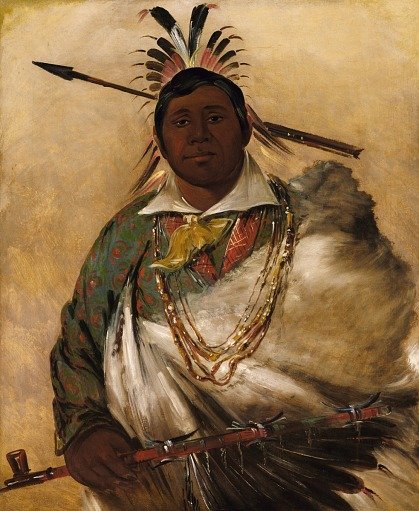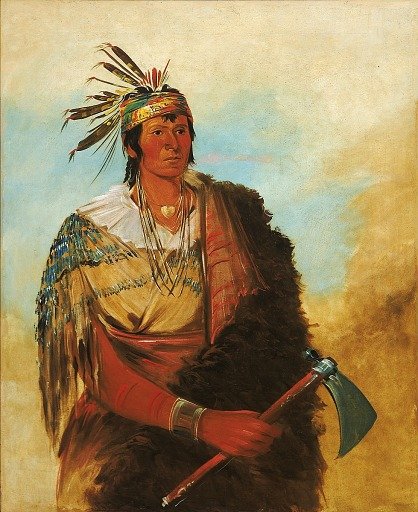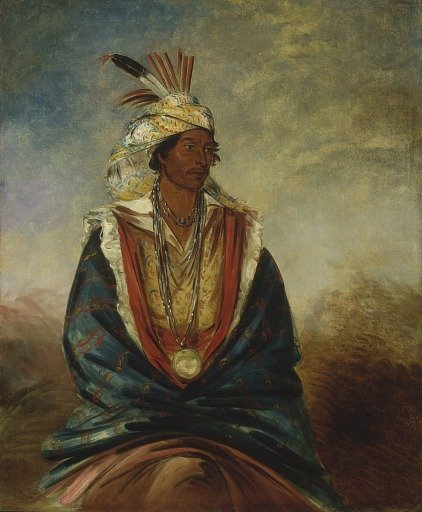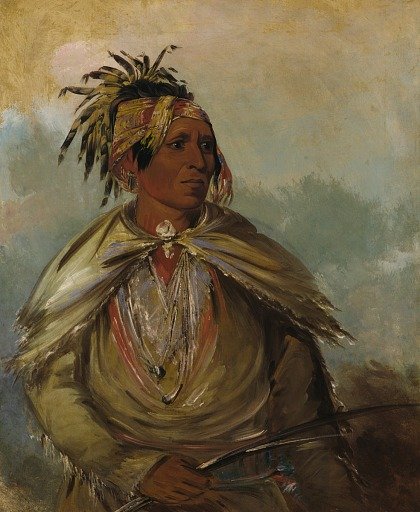
Pah-mee-ców-ee-tah, Man Who Tracks, a Chief
From the collection of Smithsonian American Art Museum. Free to download, adapt and use — no permission needed.
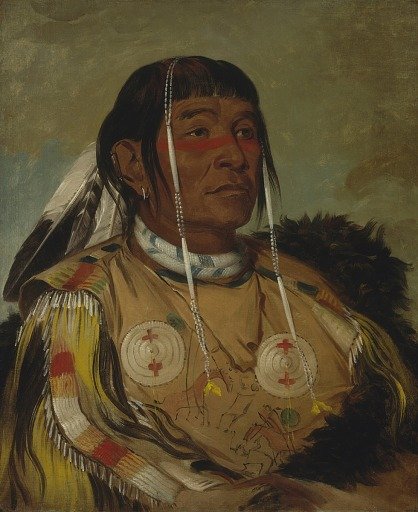
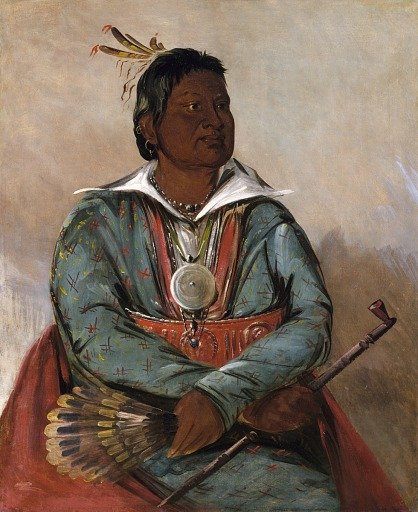
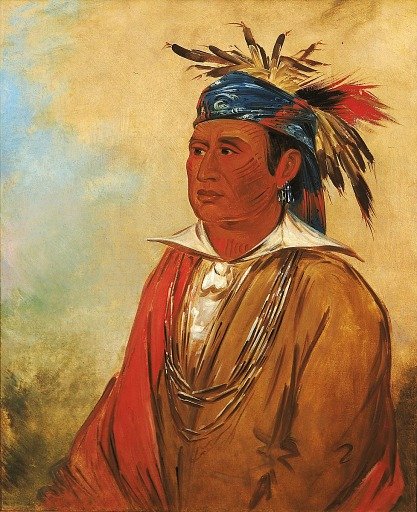
George Catlin probably painted this portrait of Man Who Tracks, a member of the Peoria tribe, at Fort Leavenworth (in today’s Kansas) in 1830, the same year he took portraits of the Delaware, Kaskaskia, Kickapoo, and other tribes. Catlin’s efforts from 1830 are generally considered his first attempts at Indian portraits in the West. In his travel account Letters and Notes, which he published in the 1840s, Catlin described his portraits of the Peoria, particularly Man Who Tracks and No English (see 1985.66.253): “Of this tribe I painted the portraits of . . . [Man Who Tracks and No English]. These are said to be the most influential men in the tribe, and both were very curiously and well dressed, in articles of civilized manufacture.” (Truettner, The Natural Man Observed, 1979)
Smithsonian American Art Museum’s own description