CC0 · no rights reserved
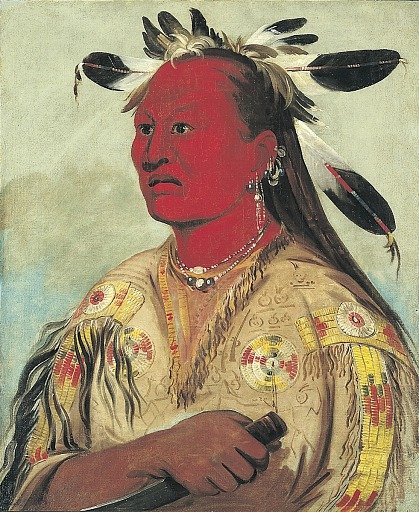
Stán-au-pat, Bloody Hand, Chief of the Tribe
From the collection of Smithsonian American Art Museum. Free to download, adapt and use — no permission needed.
About this work
George Catlin described Bloody Hand, chief of the Arikara tribe, as having “his face painted with red vermilion, scalping-knife in his hand,” and “wearing a beautiful dress.” Catlin was fortunate to meet Bloody Hand and his daughter when they were visiting the smaller of two Mandan towns. Since 1823, when traders from the American Fur Company allied with the Sioux to attack and destroy their village, the Arikara had harbored “hostile and deadly” feelings toward all whites. Catlin painted Stán-au-pat at an Arikara village in 1832. (Catlin, 1848 Catalogue, Catlin’s Indian Gallery, SAAM online exhibition)
Smithsonian American Art Museum’s own descriptionSubjects
Credit lineStán-au-pat, Bloody Hand, Chief of the Tribe. 1832. George Catlin, born Wilkes-Barre, PA 1796-died Jersey City, NJ 1872. Smithsonian American Art Museum, Smithsonian American Art Museum, Gift of Mrs. Joseph Harrison, Jr.. CC0.
Similar works
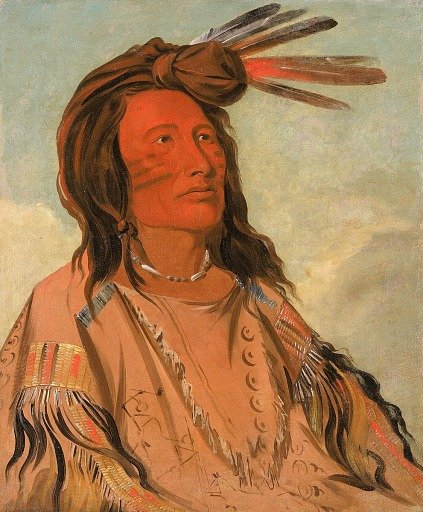 Tchán-dee, Tobacco, an Oglala Chief
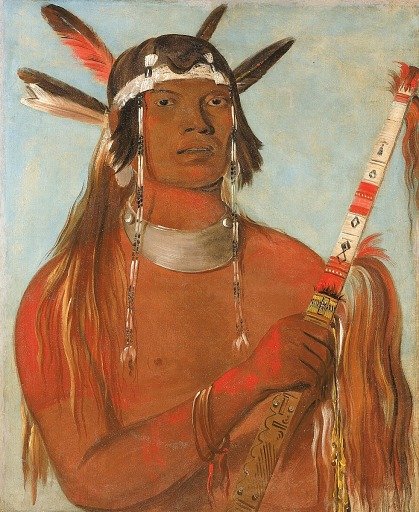 Seehk-hée-da, Mouse-colored Feather, a Noted Brave
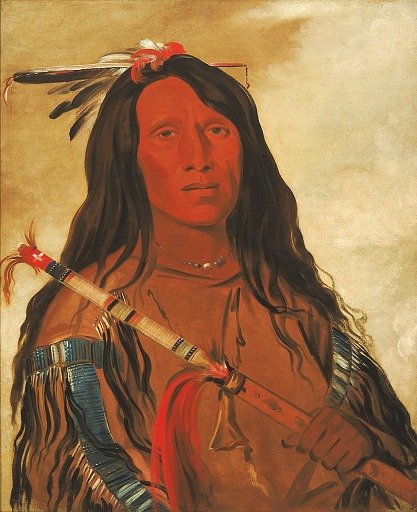 Né-hee-ó-ee-wóo-tis, Wolf on the Hill, Chief of the Tribe
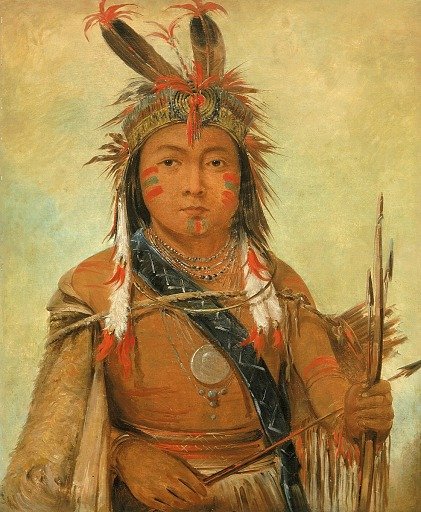 Ud-je-jock, Pelican, a Boy
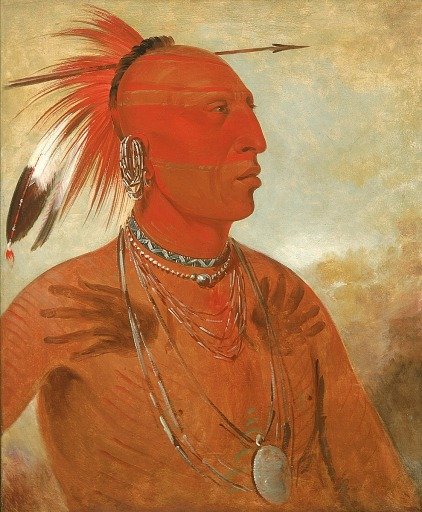 La-wáh-he-coots-la-sháw-no, Brave Chief, a Skidi (Wolf) Pawnee
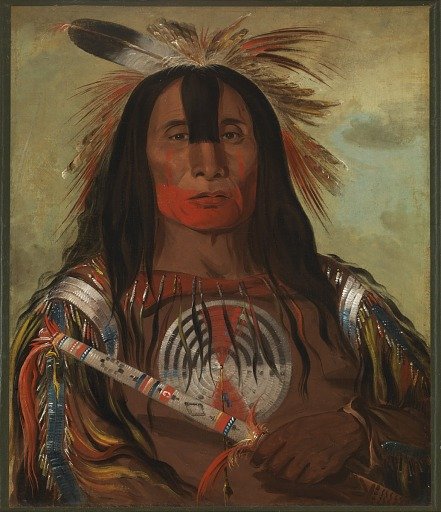 Stu-mick-o-súcks, Buffalo Bull's Back Fat, Head Chief, Blood Tribe