Square Shawl
From the collection of Cleveland Museum of Art. Free to download, adapt and use — no permission needed.
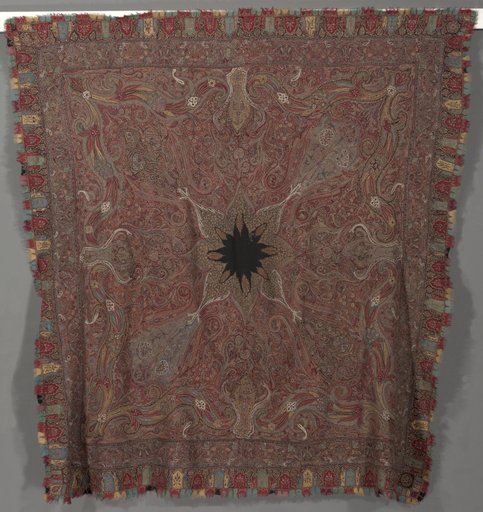
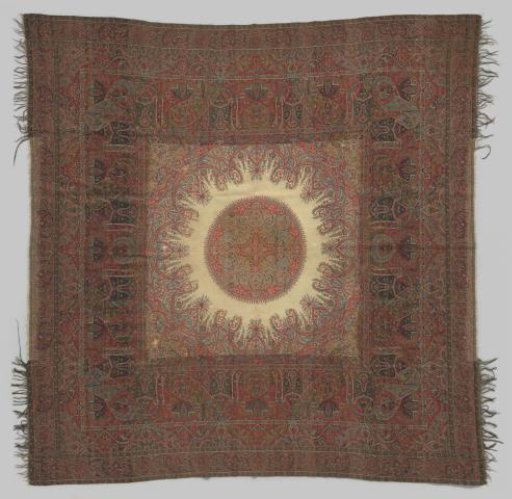
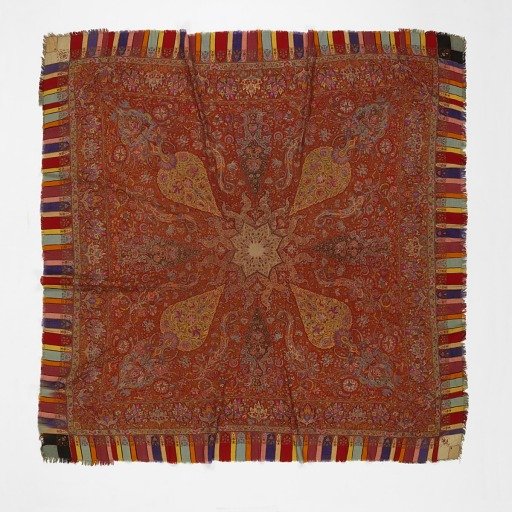
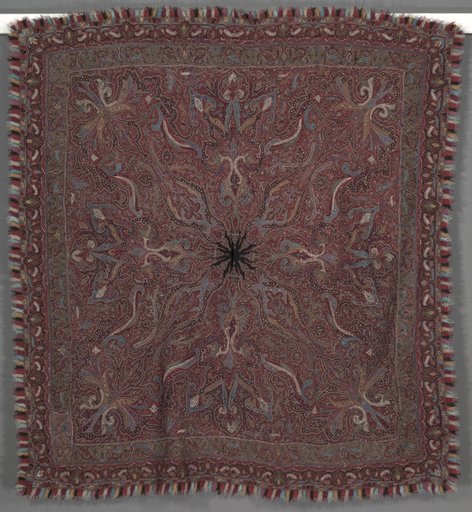
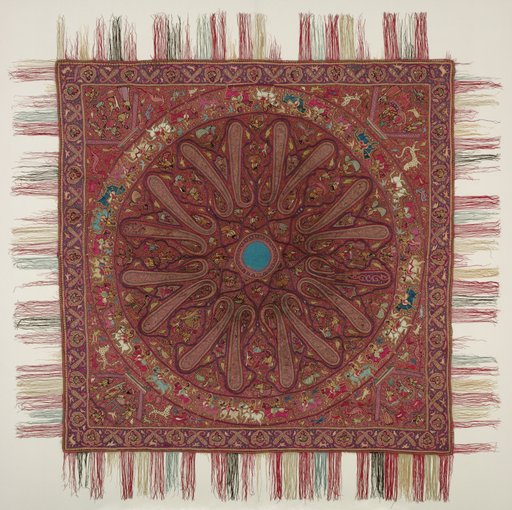
By the 1800s, the Himalayan foothill region of Kashmir was renowned for distinctive embroideries, and Kashmiri shawls were coveted by women throughout the British Empire. The center of this square shawl is in the form of an eight-petaled lotus, a symbol for the sun, and around it are the elongated forms of slender cypress trees, which became the inspiration for paisley. Every space is populated with figures: seated, standing, male, female, or playing musical instruments. Others are winged heavenly figures called peri . Birds are the only animals in these central spaces, suggesting a heavenly realm. In the next concentric ring riders in an equestrian procession alternate with flying birds. In the spandrels, the triangular sections between the circle and the square, are gatherings under a tent with animals. Some local Himalayan animals can be identified, such as the spotted snow leopard and the snake-eating markhor goat.
Cleveland Museum of Art’s own description