Helmet
From the collection of Cleveland Museum of Art. Free to download, adapt and use — no permission needed.
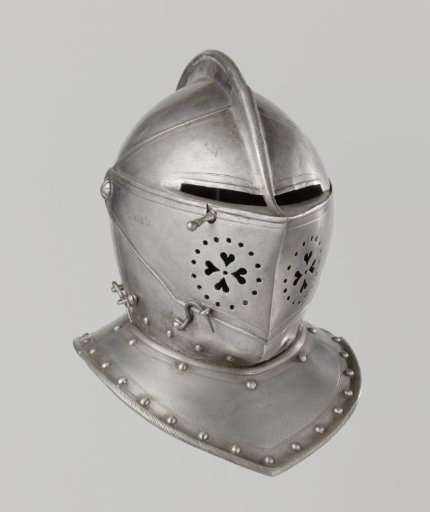
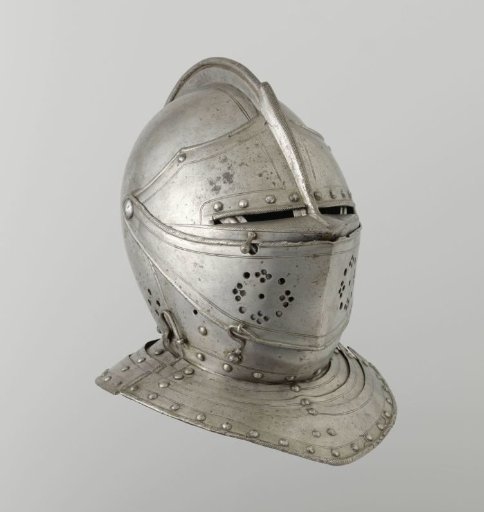
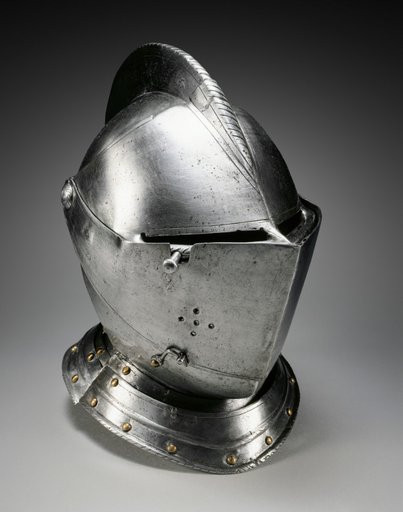
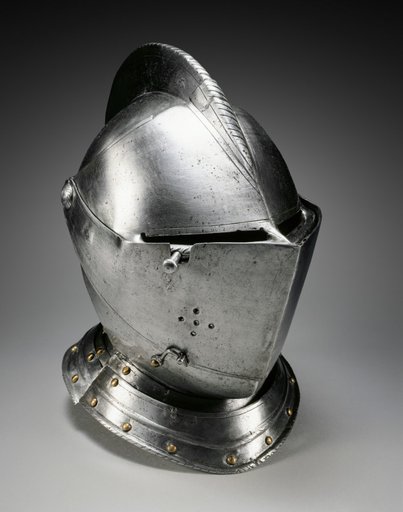
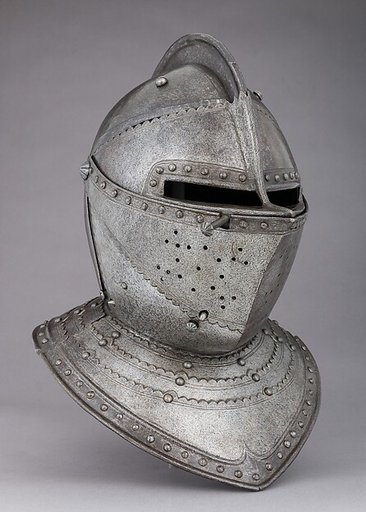
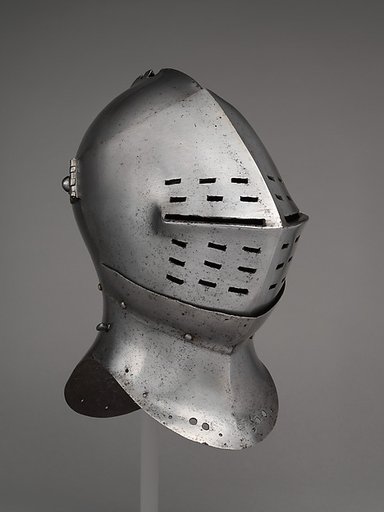
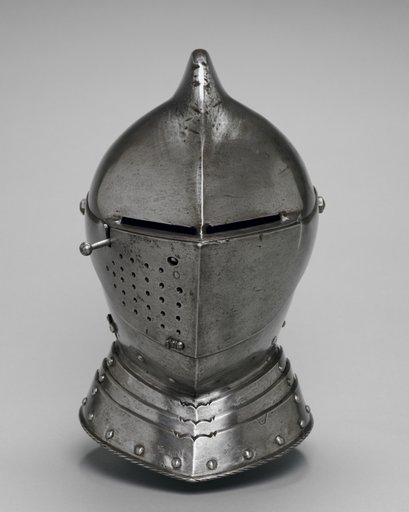
This helmet was developed for the joust, a sporting combat of arms between two mounted contestants. This example shows the asymmetry of jousting armor. The participants rode along a wall-like barrier known as a "tilt" with their left sides facing. Consequently, armor on that side of the body tended to be thicker. The breath holes in the helmet were placed on the right side (farthest from an opponent's lance) to avoid injuries from splinters. The popularity of jousts and tournaments peaked around 1500 and required armor and other sporting equipment adapted for the endlessly varied games. By the reign of Emperor Maximilian I (1493–1519), there were at least 11 different forms of mounted jousts, exclusive of the numerous ceremonial combats on foot using such weapons as swords, halberds, pikes, and throwing axes. Each blow in the contest, especially favored in Germany, was carefully numbered and prescribed by rules.
Cleveland Museum of Art’s own description