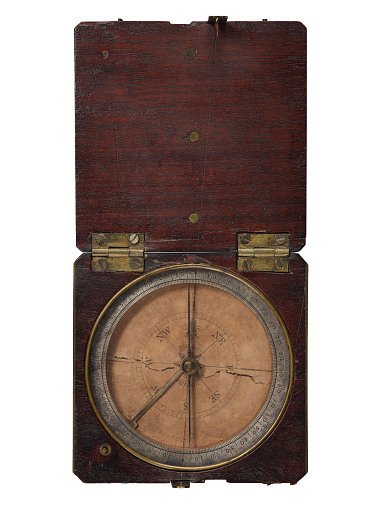
Pocket compass from the Lewis and Clark Expedition, 1804-1806
From the collection of National Museum of American History. Free to download, adapt and use — no permission needed.
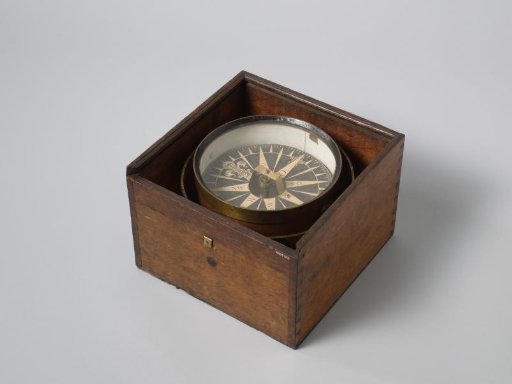
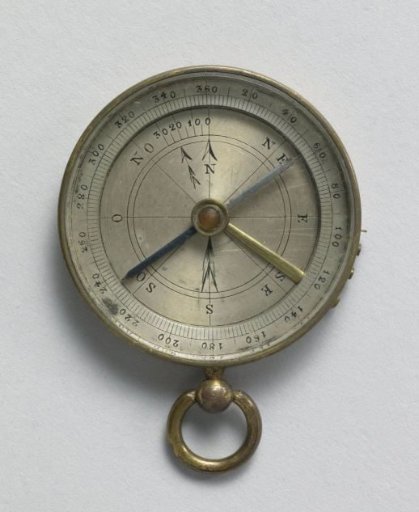
In the spring of 1803, Meriwether Lewis began to purchase scientific and mathematical instruments for a pending expedition into the northwestern region of North America. Among the items he purchased from Philadelphia instrument maker Thomas Whitney were three pocket compasses for $2.50 each, and this silver-plated pocket compass for $5. It has a mahogany box, a silver-plated brass rim that is graduated to degrees and numbered in quadrants from north and south, a paper dial, two small brass sight vanes, and a leather carrying case. Whether Lewis purchased the silver compass for himself or intended it as a special gesture for William Clark is not known.
National Museum of American History’s own description